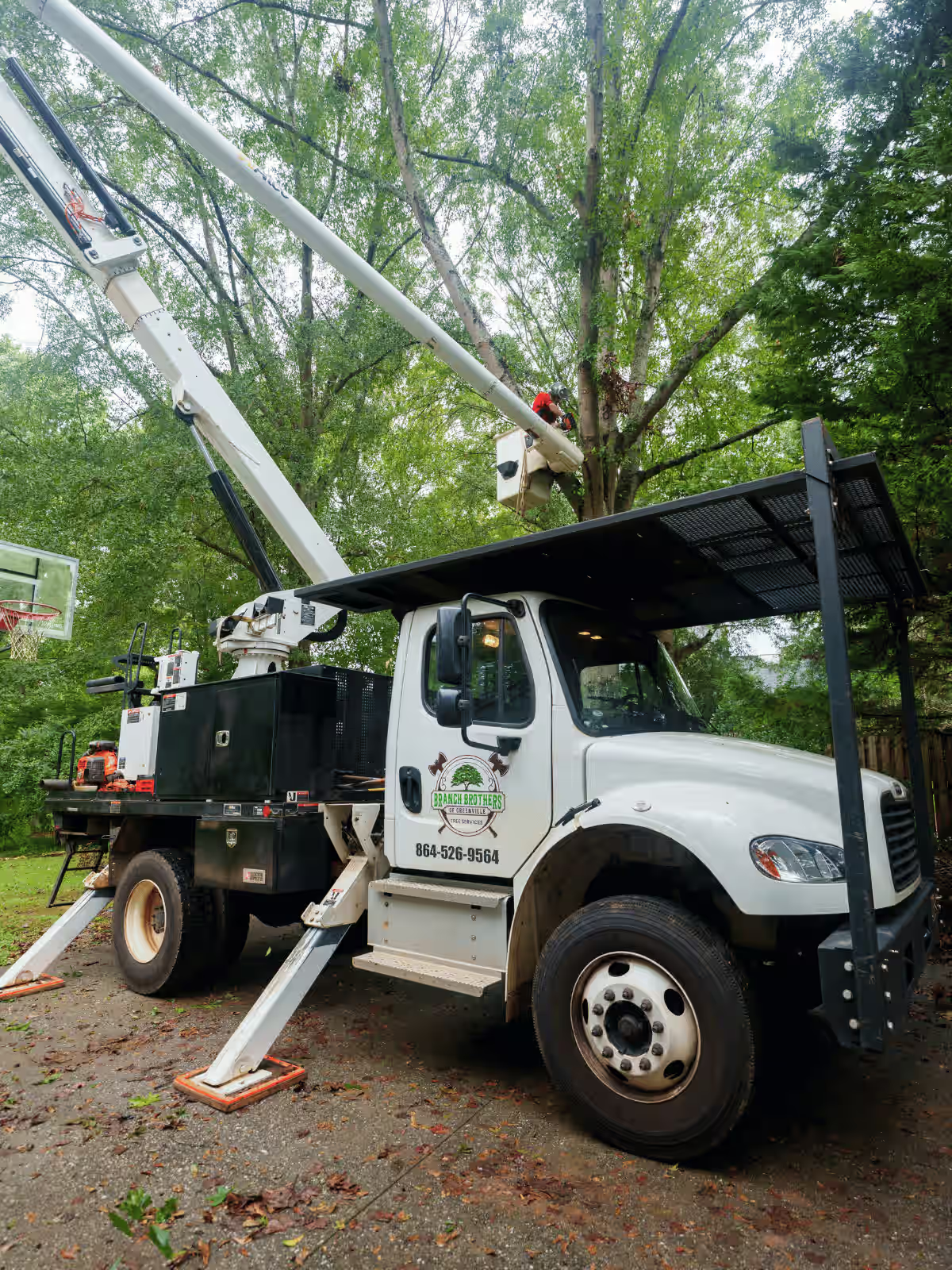
Tree Removal vs. Tree Pruning in Greenville, SC: How to Know What Your Tree Needs
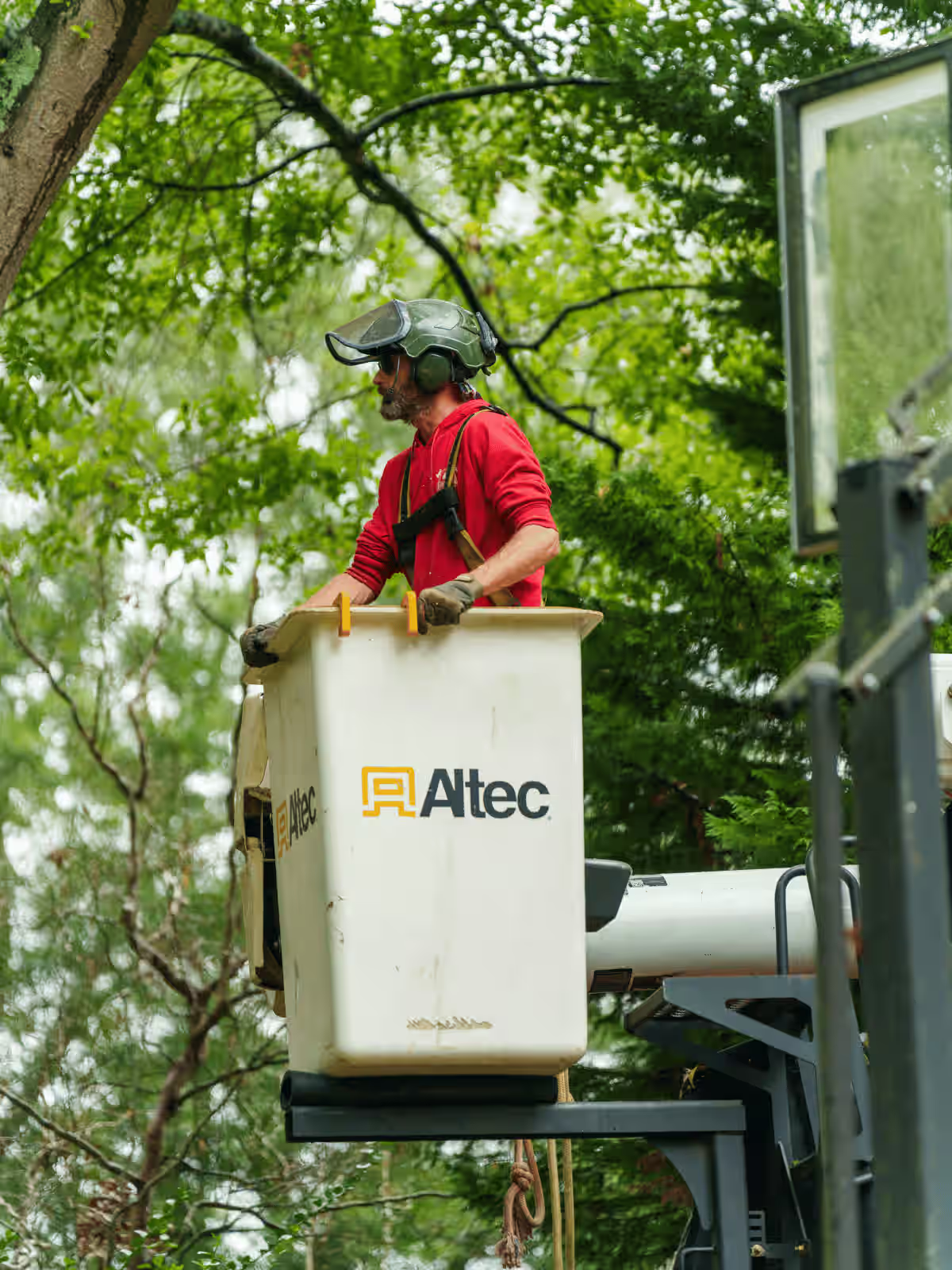
There's a tree in your yard that's starting to cause problems.
Maybe the branches are getting a little too close to the roof. Maybe it's blocking most of the afternoon sunlight. Or perhaps every time a storm rolls through Greenville, you find yourself wondering whether that tree is going to hold up.
Eventually, you start asking yourself the same question many homeowners face:
Should we have the tree trimmed, or is it time to take the whole thing down?
It's a fair question, and the answer isn't always straightforward.
After all, mature trees are a big part of what makes Greenville neighborhoods so beautiful. They're not something most homeowners want to remove unless there's a good reason.
Fortunately, many tree problems can be addressed with proper pruning. Others really do call for removal.
Here's how to tell which direction makes the most sense.
First, What's the Difference?
Tree removal is pretty straightforward. The tree is taken down entirely.
That might be necessary because it's dead, badly damaged, or creating a problem that can't reasonably be solved another way.
Tree pruning is different.
Instead of removing the tree, a professional selectively removes certain branches to improve its structure, appearance, or clearance around buildings.
You might hear people use the words "tree trimming" and "tree pruning" interchangeably. That's common, especially when homeowners are looking for tree services in Greenville.
The important thing isn't what you call it. It's whether the work is being done correctly.
There's a big difference between carefully removing a few problem branches and cutting away large portions of a tree just to make it smaller.
When Pruning Is Probably the Better Choice
If your tree is generally healthy, there's a good chance pruning can address whatever is bothering you.
Here are a few situations where that's often the case.
The Branches Are Getting Too Close to Your Home
Trees have a funny way of growing into spaces we never expected them to reach.
A tree that was perfectly positioned twenty years ago might now have branches stretching over the garage, brushing against the gutters, or hanging close to a bedroom window.
That's not necessarily a reason to remove it.
In many cases, a professional can selectively prune branches to provide better clearance while preserving the tree's natural shape.
The goal is to solve the problem without creating another one.
Your Lawn Isn't Getting Enough Sunlight
This is a common complaint from homeowners with large shade trees.
You spend money on grass seed, fertilizer, and lawn treatments, but that one section of the yard never seems to grow.
Sometimes the problem isn't the lawn at all. It's the amount of sunlight reaching it.
Selective tree trimming may help allow more light through the canopy.
But there's a limit to what pruning can accomplish. Some areas are naturally shady, and removing too much foliage can harm the tree.
Depending on the situation, shade-tolerant grass or landscaping may be a better long-term solution.
The Tree Looks Overgrown
Not every tree needs attention because it's dangerous.
Sometimes you just want your yard to look better.
Maybe the canopy has become uneven. Perhaps certain branches are crowding other trees or making the landscape feel cluttered.
Thoughtful pruning can help improve the appearance of a tree without taking away the character that makes it beautiful in the first place.
The key word here is thoughtful.
A properly pruned tree shouldn't look like someone just hacked away at it.
If you're curious about the benefits of maintaining mature trees, we've also covered how tree trimming can improve curb appeal, sunlight, and tree health.
A Few Branches Have Died
Finding dead branches in an otherwise healthy tree doesn't automatically mean the tree is dying.
Trees naturally lose limbs over time, and individual branches can be damaged by weather, insects, or other factors.
If the rest of the tree is in good condition, removing those branches may be all that's needed.
However, if large sections of the canopy are dying back, it may be a sign of something more serious.
When Removing the Tree Makes More Sense
There are situations where pruning simply isn't going to solve the underlying problem.
And while nobody likes removing a beautiful tree, sometimes it's the right decision.
The Tree Is Dead
A dead tree isn't going to recover.
Over time, its wood can deteriorate, making branches more likely to break and the entire tree more vulnerable to failure.
That doesn't mean every dead tree presents the same level of risk. Location matters.
A dead tree standing in an isolated wooded area is a very different situation from one leaning over a bedroom.
If a dead tree is close to your house or another frequently used area, professional tree removal may be the most sensible option.
The Tree Has Serious Structural Problems
Some trees develop large cracks, extensive decay, or significant root damage.
Depending on the severity, those problems can affect how securely the tree stands.
Occasionally, selective pruning or other specialized work can help manage the situation.
But there are limits.
If a tree has extensive structural damage, removing a few branches may not make it sufficiently safe.
That's where a proper assessment becomes important.
The Tree Has Outgrown Its Space
This happens more often than you might think.
A tree that looked small and manageable when it was planted can become enormous twenty or thirty years later.
Sometimes that's a wonderful thing.
Other times, the tree begins interfering with buildings, driveways, or important outdoor spaces.
If routine pruning can no longer address those problems without harming the tree, removal may be worth considering.
The Tree Is Causing Ongoing Property Problems
Maybe roots have begun lifting sections of your driveway.
Maybe the canopy is creating problems for another part of your landscape.
Or perhaps the tree is located exactly where you're planning a major home improvement project.
These situations don't automatically require removal, but they do deserve careful thought.
Before making a decision, consider whether the problem can be solved another way.
Is Winter a Good Time for Tree Pruning or Removal?
For many trees, winter is a convenient time to schedule maintenance.
Once deciduous trees lose their leaves, it's easier to see their structure and identify branches that may need attention.
Many species also benefit from pruning during dormancy, although some flowering trees are better pruned after they bloom.
Tree removal is a little different.
Trees can generally be removed throughout the year, provided conditions allow the work to be completed safely.
In Greenville, wet winter weather can occasionally complicate access, especially when heavy equipment is needed.
The best timing depends on the tree and the property.
How Much Does Tree Removal Cost Compared to Pruning?
Naturally, cost is part of the decision.
And in many cases, pruning is going to cost less than removing an entire tree.
But that's not always true.
A large tree with complicated branches hanging over a house might require specialized equipment and considerable labor just to remove a few limbs.
Meanwhile, a smaller tree with easy access could be relatively straightforward to remove.
The price depends on factors like the tree's size, condition, location, and how difficult it is to work around surrounding structures.
Rather than choosing based on price alone, think about what you're actually trying to accomplish.
If pruning solves the problem, there's no reason to pay for unnecessary removal.
If the tree has serious structural issues, however, trimming a few branches may only delay a decision you'll eventually need to make.
A Good Tree Service Should Explain Your Options
Here's something worth remembering when you're getting estimates: you should understand why a particular service is being recommended.
If someone tells you a tree needs to come down, it's reasonable to ask why.
Is it dead? Is there significant decay? Are the roots damaged?
Could pruning address the concern instead?
You should also ask about insurance, how your property will be protected, and what happens to the debris once the job is finished.
Tree work can be a significant investment, especially when you're dealing with large, mature trees.
It's worth taking the time to understand what you're paying for.

Not Sure What to Do With That Tree?
Continue reading...